Tuesday, March 17, 2009

Marley & Me

Marley & Me


  • Released Internationally on 25/12/08
  • Released in Malta by KRS on 18/03/09


In a nutshell

Back in 2005 John Grogan, an American journalist, published a memoir entitled Marley & Me: Life and Love with the World's Worst Dog, which chronicled a turbulent thirteen-year relationship with his pet Labrador. A huge bestseller, the book was later adapted as a children’s book, and has now made the predictable, but much-welcomed leap to the big screen.

Evil with a dog face

Soon after marrying his girlfriend Jenny, John Grogan moved with her to Florida where they could pursue their journalist careers in a sunny climate. Originally bought as a present for Jenny, as an attempt to temporarily quell her maternal instincts, Marley proved to be a handful from the start, and quickly turned the couple’s life, and house, upside down. He never fit in with the expected norms of canine behaviour, and no amount of training, discipline or attention could calm him down. Named after the Jamaican reggae legend, he was never quite as laid-back.

Paws for thought

Although marketed as a romantic comedy about a dog, the film pleasantly surprises by being far more than the title would have us believe. Over the thirteen years of Marley’s frantic life, Jenny and John rush through their thirties, have three children, move house, make tough career decisions, and have their relationship severely tested by all of the above. A catalyst for change, and yet a constant feature throughout, Marley is simply one of the many factors in their family’s story.

A different breed of romantic comedy

The triumph of this film is that is successfully manages to portray a very convincing relationship filled with life’s tough decisions, without ever becoming too sombre or preachy. Dogs and palm beaches aside, these are life events that everyone comes across, whether now, ten years ago, or in ten year’s time. Marley’s antics manage to keep the pace quick and the tone light, but the film delves far deeper than your average romantic comedy, and is all the more involving for it. The thirteen years fly by, at one point thanks to a wonderfully conceived and edited ‘two-year montage’, but the key life moments stick in the mind, largely thanks to Jennifer Aniston’s compelling portrayal.

Who’s in it?

Owen Wilson (Wedding Crashers, The Royal Tenenbaums) slips easily into the role of likeable, laid-back John who is now facing some issues with settling down. Aniston shines as Jenny, and will hopefully move onto even more demanding roles rather than remaining typecast in romantic comedies. Alan Arkin (Little Miss Sunshine, Edward Scissorhands) is entertaining as usual in his small role as John’s tough but well-meaning editor, and Kathleen Turner (Romancing the Stone, The Accidental Tourist) makes an awkward and brief cameo as a dog trainer with mettle. David Frankel (The Devil Wears Prada) juggles the pathos and the craziness well as director, and manages to cover a lot of ground in just under two hours.

In the end

Whatever your age, something should strike a chord here, and as mentioned above the relationship between Jenny and John is as much the focus as the titular dog. If you’re a dog lover, this should be a treat, whereas if you’re not, you’ll probably still find it hard to resist Marley’s enduring appeal, and especially the film’s charm.


Mark7


Trailer:

http://www.apple.com/trailers/fox/marleyandme/ (High-res Quicktime)


Tuesday, March 10, 2009

Watchmen

Watchmen2

  • Released Internationally on 06/03/09
  • Released in Malta by KRS on 06/03/09


In a nutshell

Showered with reverential praise in the comic book world, Watchmen was published as a 12-part graphic novel in the 80s. A multifaceted, dark tale of superheroes in a realistic, present-day world, it has finally made the ambitious jump to be big screen as a single film, albeit just shy of three hours long.

Smells like the 80s

Set in 1985, the film opens with the murder of a certain Edward Blake, later revealed to be the masked superhero ‘The Comedian’. As the back-story unfolds, we learn how masked vigilantes like him have been an essential part of American society for a number of decades, often playing an important role in key historic events. From WW2 to the cold war, superheroes are a daily part of the headlines. It turns out the Vietnam war was in fact won by the Americans, thanks to a healthy dose of heroics, thus helping Nixon get elected to his third term in office. But as these heroes fall out of favour, they become outlawed in 1977.

Mystery men

As the various masked crusaders fade into retirement, descend into madness, or meet an early demise, two continue to work for the government past the ‘77 ban – the now deceased ‘Comedian’, and a rather blue, serene guy of moderate build, Dr. Manhattan. The latter is shown to be the only hero with supernatural powers, as a result of a freak lab accident when younger. The most interesting of the heroes, a lithe, ferocious little guy with Rorschach blots on his mask (and hence known as, you guessed it, Rorschach) continues to operate in the shadows, running from the law and keeping his own agenda. The Comedian’s demise sets him thinking, and he seeks out the other ‘watchmen’ to seek their help with retribution.

By way of introductions

After starting off with the murder, the film has decades of back-story to go through before returning to the present and continuing with the plot. Whilst done by means of different chapters in the novel, this must have been one of the most daunting tasks facing the filmmakers, but they pull it off in style. Ironically, the complex, multi-thread first half of the film was the part I found most enjoyable. The cutting back and forth between the present and the past manages to remain clear, relevant, and most importantly entertaining, despite having to dish out background information on all the superheroes, including a lot of detail about The Comedian himself. Unfortunately, this excellent momentum and editing tapers off in the second half of the film, although the ending manages to be both satisfying and unpredictable.

Watch and listen

As in previous comic book adaptations, the director benefits from having excellent source material, from which, besides the story, he can lift the look of the characters and environment, as well as the action. In fact certain scenes are reproduced exactly from the novel, thus remaining faithful to the author’s vision, and probably pleasing comic book fans. But where this film excels, and stands out as a fresh artwork of its own, is in the sound arena. Boasting a collection of song classics that would make Tarantino proud, the film is punctuated with wonderfully orchestrated scenes that mix music and visuals to perfection. The comedian is brutally murdered to the mellow sounds of Nat King Cole’s ‘Unforgettable’, which is exactly what the scene is, his funeral starts off with Simon and Garfunkel’s ‘Sound of Silence’, and a later tender moment is scored with Leonard Cohen’s often covered ‘Hallelujah’. There’s even a nod to Apocalypse Now as Dr. Manhattan cleaves through the Vietnam battlefields to the sound of Wagner. But the most memorable sequence, and in my opinion the highpoint of the film, is the opening credits. Reworking Dylan’s ‘The Times They Are A-changing’ to cover six minutes of flashbacks, the sequence moves through American history, with key events set up as frozen tableaus, showing the impact of superheroes on the past. It is one of the best opening credit sequences I have ever seen. Sadly, the original score by composer Tyler Bates doesn’t rise to the same level as the songs and as in his previous weak efforts is serviceable, but forgettable.

Who’s in it?

The graphic novel was written by Alan Moore, who also wrote V for Vendetta, and illustrated by Dave Gibbons. Much of the film’s credit obviously goes to them. Zack Synder, who successfully adapted another graphic novel, 300, took on the huge task of directing this complex saga, and as mentioned above his efforts in the first act are very effective. Jackie Earle Haley (Little Children) provides narration as well as a vicious performance as Rorschach, and Patrick Wilson (Angels in America, Little Children) is Nite Owl II. Carla Gugino (Sin City) acts her age in flashbacks as Silk Spectre, and also appears in the present as the ageing mother of Silk Spectre II, played by Malin Akerman (The Heartbreak Kid). Billy Crudup (Big Fish, Almost Famous) is the past, face and voice of Dr. Manhattan, whilst the allegedly smartest guy on earth, Ozymandias is portrayed by Matthew Goode (Match Point, last year’s Brideshead Revisited).

In the end

This is definitely not a film for everyone. Comic-book adaptations tend to go down very well with certain viewers, and not so well with many others. Personally, I think they can vary in quality, just like any other genre. This ambitious, complex film benefits from having excellent source material, and therefore a great story, but ultimately suffers due to having so much ground to cover in the space of one film. Still, it starts impressively and manages to end on a high, despite sagging a bit in the middle. The graphic violence, sometimes stylized, but often not, might be hard to stomach, but it remains faithful to the novel, and adds to the dark nature of the world being portrayed. Despite its flaws, this is the first head-turning release of the year, and is a visual and aural feast you should see on the big screen.


Mark8


Trailer:

http://www.apple.com/trailers/wb/watchmen/ (High-res Quicktime)


Tuesday, March 03, 2009

Milk

Milk2

  • Released Internationally on 26/11/08
  • Released in Malta by KRS on 04/03/09


Harvey who?

Harvey Milk was the first openly gay person to be elected to public office in the United States. That was way back in 1977, but his life and story still resonates today. Only a year later, not yet 50, he was assassinated by a former colleague, but like all great activists his work and vision carried on and grew beyond his death, thanks to the consciousness and momentum he had helped create.

Not your average biopic

In the tradition of other portrayals of historic figures such as Gandhi, the film opens with the announcement of his assassination, yet then manages to be a relevant and absorbing film despite having already delivered its ending. Milk was largely unknown outside the US prior to the release of this film, which allows the plot and character to unfold with an element of novelty, despite being largely faithful to historic facts. We first meet Milk in hippie attire as a 40-year old who’s new to San Francisco, but over the next 8 years of his life we witness a physical and aspirational transformation that helps him overcome two electoral defeats and find the strength to finally gain his historic win, changing the lives of many homosexuals nationwide in the process.

Relevant then, relevant now

At the time, the main news items that drove Milk to start campaigning were the ongoing debates and referendums seeking to limit the employment rights of gay teachers in various states. Despite his achievements, we can fast-forward 30 years to today, when some of the same states are debating civil rights for gays, mostly involving marriage and adoption, and the issue is now one affecting the entire western world. At the time of writing, Milk has just won two Oscars – for Best Original Screenplay and for Best Actor, and both recipients gave impassioned acceptance speeches about this very current issue, highlighting how topical it is, and what a personal project this was for them.

“All men are created equal”

Dustin Lance Black, who penned the script based on historical archives and a couple of biographies, is a gay activist himself, and a lot of his previous work has involved gay issues. His screenplay manages to portray Milk as a true-life character, with both his flaws and fortes, and also includes a number of inspiring scenes of Milk addressing public gatherings, which help add the appropriate sense of occasion and history to the events on screen. Acclaimed director Gus Van Sant (Good Will Hunting, Finding Forrester, Elephant) is also openly gay, although his previous work has covered a broad range of issues and characters, without focusing much on homosexuality. His deft touch is visible everywhere, as he melds archival footage and newsreels with new material, yet never crossing into that ‘documentary’ feel, and telling Milk’s story as a story, not merely a sequence of events.

Best Actor

The focus of the film remains, and will probably remain, Sean Penn’s masterful performance as the titular character. Despite having the potential advantage of portraying a lesser known character, he still makes the physical resemblance remarkable, as confirmed by the real life photos shown during the end credits (I love it when they do that – it adds so much to what you’ve just seen). Ever since seeing the amazing trailer (see below) last summer, I was impressed by how different Penn looked. Subtle differences, such as mannerisms, posture and voice, help you completely forget the Sean Penn you might remember from Mystic River or Dead Man Walking. Whilst watching Frost/Nixon earlier this year, I felt that I was watching an incredible piece of acting. With Milk, it was only after the film that I realised how immersed into the character Penn had been, and how I had thought of him simply as Harvey Milk for over two hours.

Out of the closet and onto the streets

Complementing Penn, and never overshadowed by him, is the rest of the impressive cast. James Franco (Pineapple Express, Spider-man) starts off the film as Milk’s new lover, and their rocky relationship provides a backbone to Milk’s political career. Emile Hirsch (Into the Wild, Speed Racer) is Cleve Jones, one of his most resourceful campaigners, and Diego Luna (Frida, The Terminal) is the next “Mrs. Milk”, who feels neglected by Harvey’s focus on politics and not on their budding relationship. The increasingly notable Josh Brolin (W., No Country for Old Men) gives a brief but complex portrayal of Milk’s political colleague and potential adversary, who may have orientation issues of his own beneath his bullish, traditional exterior. Held together by a mix of songs from the era, and sombre, elegant score from veteran composer Danny Elfman, the film has class written all over it, and is as entertaining as it is relevant.


Mark8


Trailer:

Slumdog Millionaire

Slumdog Millionaire

  • Released Internationally on 12/11/08
  • Released in Malta by KRS on 28/02/09


Slumdog is the most celebrated film of the year. Why?

A. It is one of the few feel-good movies of the year

In an eventful year, in which a new era of leadership and optimism was ushered into the United States, but also in which a global recession started to spread from the world’s largest economies to the dinner tables of families everywhere, it would seem understandable that viewers would opt for lighter fare when selecting their film for a night out. And in usual fashion, the winter months have been populated with moving, brilliant, but often heavy and demanding dramas, which have failed to light up the box-office like the thrill-rides released last summer. Which is why Slumdog Millionaire stands out. Refreshingly original, it chronicles the participation of Jamal, a low-class teenager from the slums of Mumbai, as he amazes audiences en route to the final questions of the quiz show ‘Who Wants to Be a Millionaire?’.

B. It is a rags-to-riches tale of love and success

As he battles through question after question, we follow him on his incredible journey from his days as a trouble-making street-kid running from the police, through his teenage years with his brother after the murder of their mother, through to his current hot-seat. The plight of the children in the slums, and their eventual exploitation by organised crime posing as orphanages, is far from ‘feel-good’, and makes for impressive viewing. But Jamal and his brother survive the toughest of situations, and manage to carve out a living on their own. Joining them on their childhood journey is fellow orphan Latika, whom Jamal likes from an early age, but who gets left behind and ends up in unpleasant company. Never forgetting her, Jamal remains determined to find his one true love, and eventually takes part in the quiz show because he knows she’ll be watching. The love story isn’t flawless, but the script manages to avoid it seeming like Jamal simply needs the money to attract her.

C. It is a technically brilliant high-speed ride through India

Director Danny Boyle (Trainspotting, 28 Days Later) has been the target of most of the praise and awards heaped on this film, and it’s easy to see why. For most of its running time, the film intertwines three plot lines – the actual quiz show, the flashbacks to Jamal’s childhood, and the police interrogation of Jamal to see if he is cheating. Still, the film runs slickly, without ever getting confusing, and manages to pack in pathos, humour and excitement in equal measure. After the tense prologue, the wonderful title sequence is a vivid introduction to the slums of Mumbai, India’s so-called ‘maximum city’, as the children are chased off an airfield by the police. Like most memorable sequences in the film, it all rushes past to the sound of A.R. Rahman’s pulsating songs. The prolific composer, one of the hottest in Bollywood, provides big beats as well as soothing score throughout the film, and makes it sound just as great as it looks. The Indian children who portray the trio as children and teenagers are similarly impressive, as are Dev Patel and the luminous Freida Pinto as the adult Jamal and Latika.

D. It is written

Ultimately, it’s hard to single out one or two reasons for Slumdog’s success. It’s just one of those films where everything falls into place, and you realise you’re watching something fresh, exciting and unique. The scenes in Mumbai won’t have you booking flights anytime soon, but out of the filth and abuse comes a heart-warming love story, and a hero worth rooting for.


Mark8


Trailer:

Tuesday, February 24, 2009

Frost/Nixon

Frost-Nixon

  • Released Internationally on 05/12/08
  • Released in Malta by KRS on 11/03/09


A little bit of history

  • June 1972 – Watergate break-in foiled.
  • March 1973 – Evidence of the involvement of the Nixon administration comes forth.
  • August 1974 – Richard Nixon resigns the US presidency – to date the only person to do so.
  • August 1976 – David Frost signs a contract with Nixon, outlining the interviews.
  • March/April 1977 – Frost interviews Nixon over 12 days, each session lasting around 2 hours.
  • May 1977 – Four 90-minute programs are broadcast, drawing over 40 million viewers.
  • April 1994 – Nixon passes away four days after suffering a stroke.
  • January 2004 – Writer Peter Morgan approaches David Frost about writing a play based on his 1977 interviews.
  • August 2006 – ‘Frost/Nixon’, the play opens in London, to rave reviews.
  • September 2007 – David Frost publishes ‘Frost/Nixon’ – his book about the interviews, including full transcripts of all the recording sessions.
  • October 2008 – A big-screen adaptation, directed by Ron Howard, premieres in London.
  • February 2009 – Despite not having even been born for the first 6 dates above, this viewer finds the film to be engrossing, exciting, and one of the best-made films of the year.


A sense of occasion

The opening titles merge into archival audio and footage of the Watergate hearings, interspersed with behind-the-scenes preparations as Nixon is about to make his resignation announcement. Director Ron Howard also uses the clever technique of mock-documentary shots, where actors from the film give brief, into-the-camera interviews, in character, which provide intimate information about how it felt to be watching those broadcasts at the time. These snapshot interviews pepper the film throughout, and help add insight as well as remind us that we are watching landmark history events.

Frost

We then head downunder to find David Frost, who at the time was hosting a talk show on Australian television. The lively showman, with something of a playboy reputation, is intrigued by the happening across the globe, and dreams up a television coup that could draw in millions of viewers. Strongly believing in his idea, he sets about building a team to help bring it to life, and contacts Nixon’s team to try and set up a meeting. As expected, his idea is shot down by friends, advisors and advertisers, but he keeps at it, even forking out the initial cash from his own pocket. As the project miraculously takes shape, everyone’s excitement is palpable. Michael Sheen, whom you might remember as Tony Blair in The Queen, reprises his acclaimed role from the play, and it’s evident that this is a character he is by now very comfortable playing. His charm and optimism win everybody over, but when push comes to shove and the interviews get rough, he shows what a great interviewer Frost is and why he was a worthy adversary for Nixon.

Nixon

Also reprising his much-acclaimed role from the play is Frank Langella (Good Night and Good Luck, Superman Returns) as Nixon. The veteran stage and screen actor has the added difficulty of portraying a widely-known character, yet despite not much of a physical resemblance he becomes the president remarkably, and at no point does it feel like you’re watching an impersonation. His elegant voice and manner instantly convince you that this man once ruled the world, yet his eventual defeated expression and sweaty upper lip manage to show a man who is carrying a heavy burden. It’s a joy to watch him and Sheen spar throughout the film.

Stranger than fiction

Watching a film like this, and knowing that this actually happened a few decades ago makes it all the more captivating. A few liberties with the truth were taken by writer Peter Morgan when the play was written, and the film script was adapted by Morgan himself. Most variations from the truth are mere technicalities, as highlighted by Frost in his book, and detract nothing from the essential facts. One of the fictionalizations, a late-night phone call by Nixon on the eve of the crucial interview, was hailed by Frost himself as a ‘masterpiece’.

The rest

The great Kevin Bacon (Apollo 13, Murder in the First) gives an upright and determined performance as Nixon’s chief of staff, who leads the Nixon team and at times seems to be the only person who truly believes in the ex-president and who will do anything to safeguard his interests. Frost’s team is made up of Oliver Platt (A Time To Kill, Indecent Proposal) as editor Bob Zelnick, Sam Rockwell (Matchstick Men, The Hitchhiker’s Guide to the Galaxy) as author Sam Renton Jr. and Matthew Macfadyen (Pride and Prejudice) as producer John Birt. En route to the US, Frost also picks up the lovely Caroline Cushing (Rebecca Hall – Vicky Cristina Barcelona, The Prestige). Ron Howard (Apollo 13, A Beautiful Mind, The DaVinci Code) directs.

In the end

From the word go, the film makes it very clear that what the public and the press want is an apology from Nixon, and Frost sets out to get that apology on prime-time TV. Throughout the film, Howard builds beautifully towards the grand finale. Watching the interviews unfold is a joy, as Nixon cleverly ‘stonewalls’ all Frost’s questions and plays out the interviews exactly as he wants to, but watching Frost come back in the ring as he desperately tries to break Nixon down is one of the cinematic highlights of the year.


Mark8


You can see a few clips from the original interviews here: http://www.frostnixon.com/

Trailer:

Monday, February 23, 2009

Oscars for 2008


  • Best Picture: Slumdog Millionaire
  • Best Director: Danny Boyle, Slumdog Millionaire
  • Best Actress: Kate Winslet, The Reader
  • Best Actor: Sean Penn, Milk
  • Best Supporting Actress: Penelope Cruz, Vicky Cristina Barcelona
  • Best Supporting Actor: Heath Ledger, The Dark Knight
  • Best Original Screenplay: Dustin Lance Black, Milk
  • Best Adapted Screenplay: Simon Beaufoy, Slumdog Millionaire
  • Best Animated Feature: WALL-E
  • Best Documentary Feature: Man on Wire
  • Best Foreign Language Film: Departures (Japan)
  • Best Cinematography: Slumdog Millionaire
  • Best Film Editing: Slumdog Millionaire
  • Best Art Direction: Benjamin Button
  • Best Costume Design: The Duchess
  • Best Makeup: Benjamin Button
  • Best Live Action Short: Toyland
  • Best Animated Short: La Maison en Petites Cubes
  • Best Documentary Short: Smile Pinki
  • Best Visual Effects: Benjamin Button
  • Best Sound Editing: The Dark Knight
  • Best Sound Mixing: Slumdog Millionaire
  • Best Music Score: A.R. Rahman, Slumdog Millionaire
  • Best Song: Jai Ho, Slumdog Millionaire

Monday, February 16, 2009

Gran Torino

Gran Torino Title2

  • Released Internationally on 12/12/08
  • Released in Malta by KRS on 20/02/09


In a nutshell

Recently widowed Walt Kowalski is retired after a lifetime of service in the car-making industry, and as a soldier in the Korean War. He has strongly-held beliefs about manhood, the American way, religion and the influx of immigrants into his neighbourhood, but they’re all about to be tested by his relationship with his troubled neighbours.

Welcome to the neighbourhood

Despite being of Polish descent himself, Walt considers himself a true American, and openly dislikes all the immigrants moving into his locality, just as he picks on his Italian barber and disapproves of his son’s Asian car. He knows what he likes, right down to his favourite brand of beer and his prized possession – a 1972 Ford Gran Torino, and he’s determined not to make anyone change his mind. His neighbourhood is attracting a large number of immigrants however, especially Hmong families, who are an ethnic group from Southeast Asia. He makes no attempt to befriend his Hmong next-door neighbours, and all he asks is that they stay off his lawn.

So many issues, so little time

One of the great feats of this deceptively-simple film is the large number of issues it manages to tackle so convincingly in under two hours, which is what makes it so enjoyable to watch and so effortlessly flowing. The character of Walt manages to combine the increasingly important topics of racism, growing old, religion and violence, and the film manages to be a remarkable study of all of them. Walt’s relationship with the village pastor, whom his wife was very close with but who he calls an ‘over-educated, 27-year-old virgin’, is particularly amusing to watch.

The man who makes the movie

The film starts, ends and is all about Clint Eastwood. He directs, acts, produces, and even lends his gravelly voice to the end credits song. The role is perfect for him because with such a rich on-screen history, it’s easy to see him as the hardened, experienced old man who’s still as tough as nails and not to be messed with. His weathered face, his deliberately slow pace, and his attention-demanding voice are enough to put genuine fear into the most loud-mouthed of youths.

Changing priorities

As the local gangs start to pick on the fatherless girl and boy next door, Walt comes to the rescue – at first just to stop the inconvenience to his property, but later out of genuine concern and righteousness. Hailed as a hero by his Hmong neighbours, he finds himself slowly drawn into their world, and takes on the missing paternal role in the life of the unconfident and bullied son. As his feud with the gangs begins to escalate, Walt is forced to decide just how much he is willing to sacrifice so that his immigrant neighbours can finally find some peace in their new neighbourhood.

In the end

The film delivers on every level. Clint Eastwood is fascinating to watch, and the different aspects of his changing character are easy to sympathise with. Despite his hardened exterior at the start of the film, every change we see in him comes about convincingly, and he never loses face or seems defeated – on the contrary, he rises above everyone else and becomes a man we should all aspire to be like. All the action happens within the same few blocks of Michigan neighbourhood, and there aren’t any fancy special effects, but this is one of the best-written and important films to come out of 2008.


Mark9


Trailer:

Tuesday, February 10, 2009

The Pink Panther 2

Pink Panther 2 Title

  • Released Internationally on 06/02/09
  • Released in Malta by KRS on 11/02/09

The sequel to the reboot

Inspector Jacques Clouseau is back, whether the world likes it or not. The bumbling French detective, made famous by Peter Sellers in the 60s and 70s, is once again out to reclaim France’s national treasure, the priceless pink diamond dubbed ‘The Pink Panther’. With a chequered history, and featuring numerous actors throughout the years, the franchise now contains eleven films, spanning over forty-five years, and of greatly varying quality. Steve Martin enjoyed moderate success when he revived the role in 2006, and most of the cast of that film are back for this sequel, as is the titular diamond with a habit of getting stolen.

The dream team

The world is in a state of panic as a mysterious criminal who goes by the name of ‘The Tornado’ swiftly makes off with priceless artefacts from England, Japan and Italy. An international team of the greatest detective minds is assembled, and based on previous achievements Clouseau is asked to lead the team. This doesn’t go down too well with his boss, Chief Inspector Dreyfuss (John Cleese, replacing Kevin Kline from the 2006 film), who firmly believes Clouseau is a nitwit. This impression is soon shared by the rest of the dream team, and after numerous public embarrassments he is thrown off the team, and the mystery solved without him. Or so they think.

All-star cast, in all-star locations

The main box-office draw is presumably the cast, which include Jean Reno (Léon, The Da Vinci Code) and Emily Mortimer (Young Adam, Match Point) reprising their roles from the 2006 outing as members of the French police staff. The dream team includes Andy Garcia (The Godfather Part III, Ocean’s Eleven) representing Italy, Alfred Molina (Frida, Spider-man 2) representing the Brits, and the stunning Aishwarya Rai as a crime expert from India. Jeremy Irons makes a brief and laconic appearance as a rich art expert thought at one point to be the ‘tornado’ in question. Very nearly upstaging all these big names are the wonderful European locations used extensively throughout the film. Set primarily in Paris, the film is a virtual tour of the city, both indoor and outdoor, and the French action is interspersed with scenes in The Vatican and other historic locales, adding some much needed class to an otherwise sometimes ridiculous film.

Silly isn’t always funny

This is the most jarring flaw of a generally fun film. A number of sequences deteriorate into poorly-executed slapstick, and despite his many talents Martin doesn’t always have the panache to pull them off. Some scenes are painful to watch, especially with stars like Garcia and Molina having to spout cringe-inducing dialogue. Thankfully, the film is peppered with a few sequences that do in fact work, and occasionally work wonderfully, but overall the film is evidently trying too hard to be funny.

In the end

Steve Martin has showed us he can be one of the funniest actors around, but despite successfully managing to revive the Clouseau character, it’s far from his best work, and the surrounding film is often flat and simple. Still fun at times, with a few genuine laugh-out-loud moments, but it works best simply as a tourist guide to Paris.


 Mark5


Trailer:

Saturday, February 07, 2009

The Reader

The Reader Title

  • Released Internationally on 10/12/08
  • Released in Malta by KRS on 04/02/09


In a nutshell

Michael Berg is a German teenager who in 1958 embarks on a passionate love affair with on older woman, Hanna Schmitz. The relationship ends abruptly, but they get back in touch with each other many years later, after he has followed a high-profile war crimes trial in which she is the defendant.

Not your average cradle-snatcher

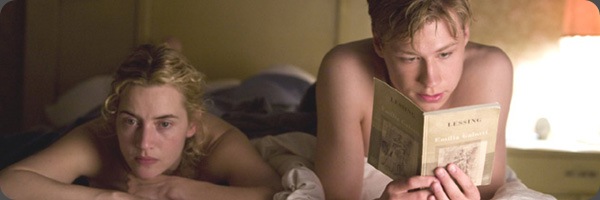
Apart from the usual trysts, the relationship between these two seemingly-mismatched lovers also involves sessions of him reading to her from the books he is studying at school; something she seems to enjoy. He is eager to please, and therefore complies willingly. Later, whilst he is studying law and attending her trial without her knowledge, he discovers that her apparent fetish for being read to dates back to her days as an SS guard in the Nazi concentration camps. He also suddenly realises that she is hiding a secret that she is determined to keep safe, even if it costs her her freedom. As the only person who knows her enough to understand what is happening, he is torn between speaking up and keeping silent, and unsure about which one is the right thing to do.

A man shaped by his past

We first meet Michael Berg in 1995, when he is portrayed by Ralph Fiennes as a cold, unsentimental man who admits to having been deeply affected by his teenage affair. His failed marriage and superficial relationships, even with his own daughter, seem to stem from his ambiguous feelings for this older woman with a horrific past. How he acted at her trial continues to haunt him, and he eventually seeks redemption in trying to resume his reading relationship. The same character is also brought to life by an impressive young German actor, David Kross, who plays the difficult role of the 15-year old Berg caught up in his first sexual relationship, as well as the 23-year old Berg who attends her trial as a promising law student. Both actors complement each other wonderfully, and it is easy to see beyond them and understand this troubled man as one person.

A woman hiding secrets

Kate Winslet has received numerous accolades for her equally-impressive performance as Hanna. Sporting a German accent throughout, she discloses little during her early scenes as Berg’s unconventional but bossy lover, yet she seems as involved as he is. But after she disappears from his life without warning, her effect on him takes on an ominous tone as the trial uncovers her dark past during World War II. Reviled as a monster by everyone else, she still casts a shadow over Berg’s life, and eventually he turns out to be the only person she can claim as a friend. Winslet’s powerful performance also covers her later years, when we, just like Berg, are left uncertain about how to feel about her.

A crew-list of note

The film is directed by Stephen Daldry, who brought a smile to everyone’s face with Billy Elliot in 2000 and then shot up to the A-list with The Hours two years later. Amongst the film’s producers are the late Sydney Pollack and Anthony Minghella, two great directors and producers who sadly passed away before they could see the film completed. David Hare, an established playwright, adapted the screenplay from the novel of the same name, just as he had done so successfully with The Hours.

In the end

Starting off deceptively as a story about an unconventional love-affair, the films truly takes off in the second act, and ends as a thoughtful and important film about doing the right thing. A classy film, with excellent acting throughout.


Mark8


Trailer:

Monday, February 02, 2009

The Curious Case of Benjamin Button

 Button Title

  • Released Internationally on 25/12/08
  • Released in Malta by KRS on 04/02/09

The storytelling skills of Scott Fitzgerald

Back in 1921, the celebrated American author F. Scott Fitzgerald (who penned The Great Gatsby), wrote the short story from which this film takes its name, which is a very brief and enjoyable read. The title character was born looking like a seventy year-old, and to the surprise and often embarrassment of all around him he slowly and surely grew younger, until his mind went blank as a tiny baby. The novella doesn’t take itself too seriously, and all that was used for this screenplay are the characters’ names and the concept of a man ageing backwards.

The wonderful writing of Eric Roth

Award-winning screenwriter Eric Roth, whose words have embellished films such as The Insider, Munich and Forrest Gump, fleshed out the story considerably, opening the film in New Orleans a few years ago, as hurricane Katrina was about to wreck havoc. On her deathbed, Daisy (Cate Blanchett) is getting some quality time with her only daughter (Julia Ormond). As they pore through the pages of a diary written by a certain Benjamin Button, the facts about his extraordinary existence come to life. Roth has succeeded brilliantly in changing a whimsical anecdote of a story into a larger-than-life tale of love, loss and the sacrifices some must make in order to have a few moments of true happiness.

The universal appeal of Brad Pitt

Anchoring this fine movie is a career-best performance by Brad Pitt, the actor who most women want to meet, and most men want to be. His admirable career may be partly due to his looks, but is mainly due to a string of excellent performances and unconventional roles, and he remains an actor who is fascinating to watch at work. His complex performance here goes hand in hand with the cutting-edge special effects, as he progresses from a frail and bent (but clearly recognizable) man in his eighties to the mid-forties man we all see in the press, through to a clear-faced twenty-five year old, with physical and facial features altering accordingly. Often acting just with his face, as it was superimposed on somebody else’s body, he still gives Button a life of his own, and draws us into his tragic story as we follow him on his unique journey.

The amazing grace of Cate Blanchett

Twelve years after he was born, but still looking like a man well into his seventies, he meets a young girl named Daisy, and an unusual friendship is born. As the years go by and his physical transformation becomes apparent to her, he tries to win her affection, but she goes off touring the world with her dance troupe, and rejects his advances. His patience and determination are rewarded when she returns home in the early 1960s (when they’re both in their forties, and they both look it), and their friendship quickly blossoms into romance. This is undoubtedly the high-point of the film, as these two lovers in their prime share a few magical years of normality. Blanchett shines during her flashback scenes in the film, and also has the difficult task of re-living all her emotions as a dying woman in her eighties during the present-day scenes.

The magical vision of David Fincher

Weaving all the above together in a wonderful fairytale is the deft touch of director David Fincher. The acclaimed director of such gems as Fight Club, Se7en, and the recent Zodiac brings it all together seamlessly, and with the help of standout cinematography, art direction and music creates a film with a glorious vintage look and feel, without ever letting the details or special effects come in the way of the curious case in question. One particular sequence stands out as probably the most beautiful in all of the films I have seen from 2008, as Button takes Daisy sailing and they enjoy their small and deserved share of the good life. The scenes, combined with Alexandre Desplat’s music, and coming after such a great build-up, make for a masterful movie moment. It’s also to Fincher’s credit that such a long film rarely films dragging, and if anything gets better as it progresses.

In the end

What struck me most about this remarkable film is that it doesn’t try to hit you over the head with any big message. There’s no political ideal, no preachy philosophy, no complex twists or tricks. It’s just a great tale, told beautifully, and in my books is one of the best films to come out of 2008.


Mark9


Trailer: